Collection management for fossils and minerals
Photograph the fossil.
Catalogued.
Found again.
Everything sits neatly in the cabinet. Where the sea urchin in the second row actually came from is on a slip of paper in a box — or in an old photo on a hard drive. Ammodia turns the photo into the record: find site, taxonomy and geological age stay with the specimen.
- Start without signing up
- No advertising
- Free
1 · Photograph it
The photo is the record. Every other field is optional — a photo on its own is a perfectly good entry.
2 · Carry details over
The app looks for similar fossils you already own and offers to copy the shared details: taxon, geological age, formation, find site.
3 · Find it again
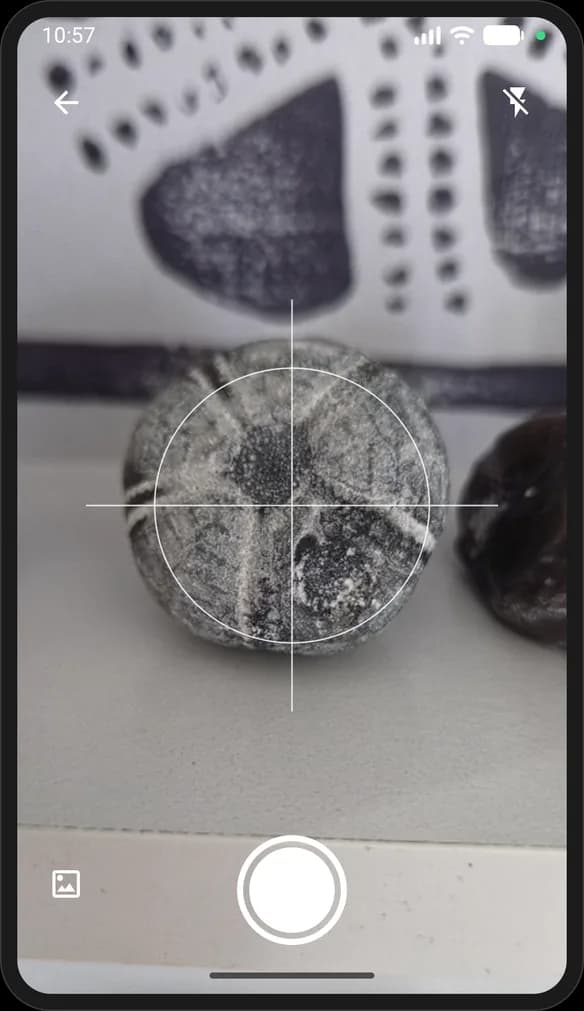
Point the camera at a specimen and the app finds it by image. Text search covers names, notes and every recorded detail.
Image search
Find it again without typing
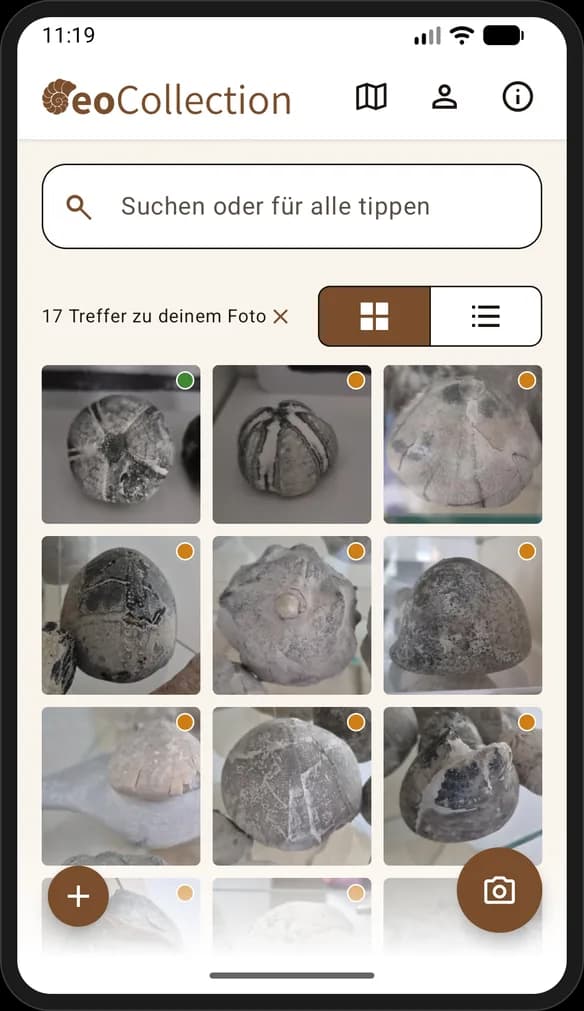
With 300 sea urchins across four drawers, no search box helps. Point the camera: Ammodia compares the image against the fossils you have already catalogued and ranks the matches by how confident it is.
- Perfect match — very likely the same specimen
- Good match — same species or same find site
- Possible match — weaker similarities are dropped
You deliberately never see a percentage — it would imply a precision that image similarity does not have.
Find sites
Set up a find site once.
Not forty times over.
The chalk pit, the gravel quarry, the stretch of beach: look the place up once, or drop the point on the map yourself. From then on you pick it from your list for every fossil instead of typing the name again — and it reads the same on every find.
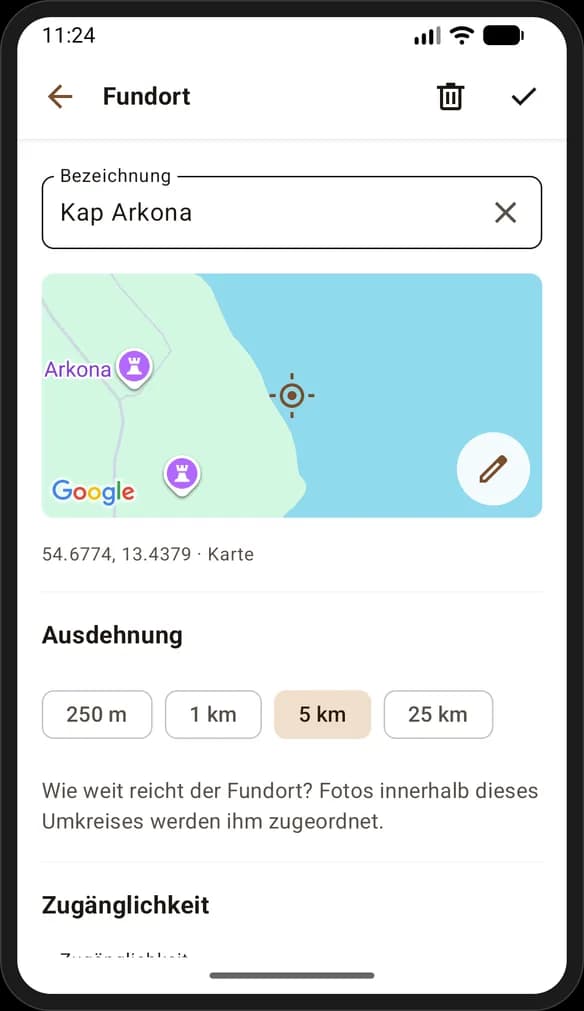
Search for it, or place it on the map
Type the name and take a suggestion, tap the point on the map yourself — or use your current position when you are standing right there.
A radius, not a pinpoint
250 m to 25 km. You decide how far a find site reaches — and deliberately keep the exact outcrop out of the database.
Access and notes
Record whether the ground is open, needs a permit, or is private land. Your notes on that are visible to your team only — never to a guest.
And when a photo does get taken at the outcrop, the app suggests the matching find site on its own.
Data fields
The fields fossil collectors actually use
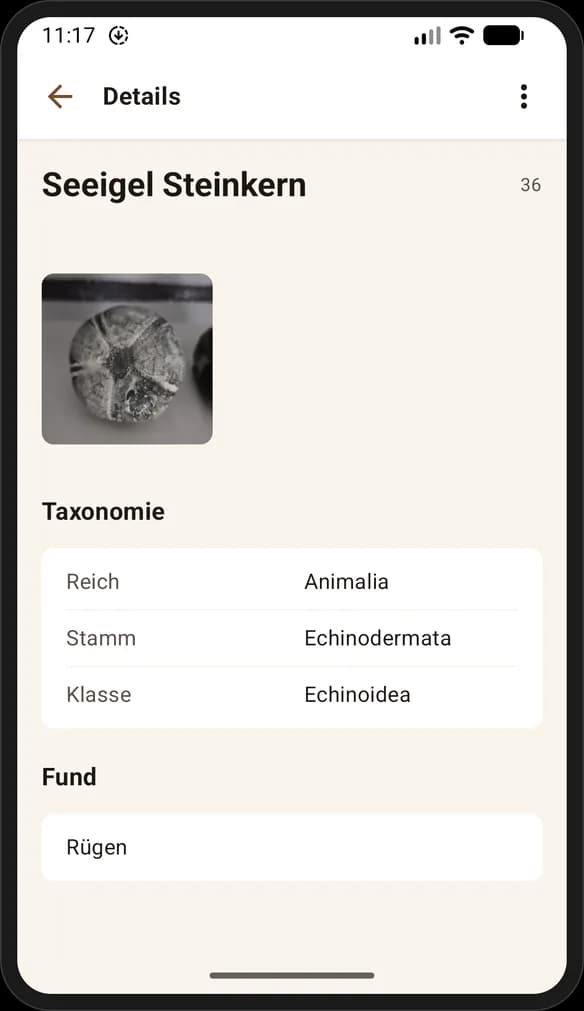
Not an empty notes app. For fossils: taxonomy from kingdom to species, geological age, formation, preservation, find site and date, measurements. For minerals: mineralogy, geology, find data, measurements.
- Kingdom → species
- Geological age
- Formation
- Preservation
- Find site & radius
- Measurements with units
- Your own fields
The taxonomy suggests and narrows, but it never validates. Determine your fossil only as far down as you actually know — “Order: Ammonites” is a complete entry.
Next up: a simple mode with far fewer fields, filtering across the whole collection, and input help that suggests from context.
Sharing & exhibiting
One collection, several pairs of hands
As a couple, a club, a working group
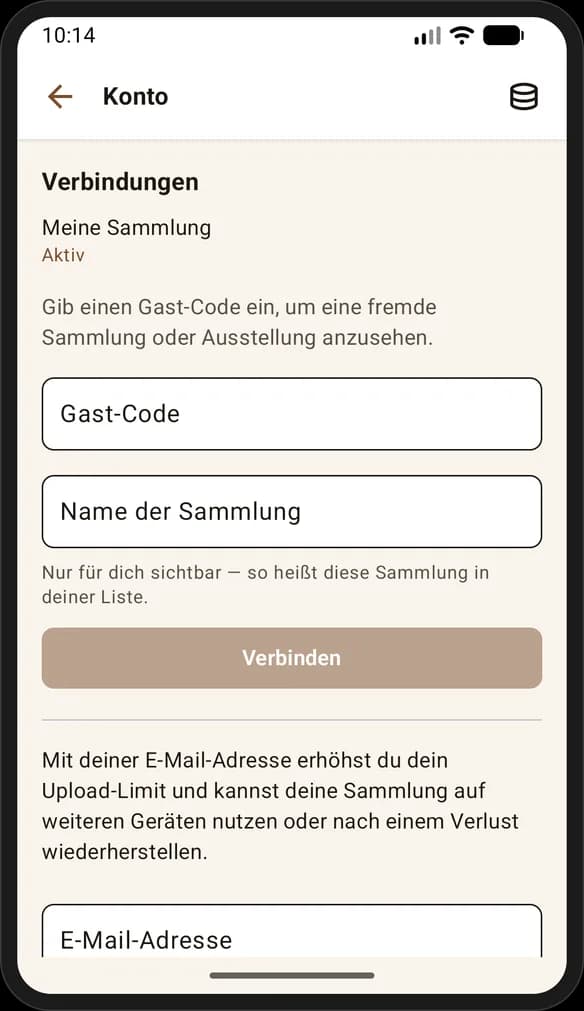
Invite others by email — they get full, equal access to the same fossil collection. No roles, no permission management.
A guest code for the exhibition
Put the code on a sign, visitors type it in and browse the collection read-only. Withdraw it and access ends on every device at once.
Find sites stay your business
One switch hides exact find sites from guests: they see the place name but no coordinates. Individual sites can be shared on purpose.
New · Web app
The long evening at the desk
The first big batch is rarely on the phone — it has been sitting on a hard drive for years: folders of photos that never became records. On a large screen you drag them across in batches — fields side by side instead of stacked, keyboard instead of thumbs. And the 40 new ones from the last trip go the same way.
- Drag photos straight from a folder — several at a time
- The same collection and the same fields as the app
- Sign in with an emailed code — no new password
Camera capture and image search stay on the phone — at your desk the fossil is not in front of you.
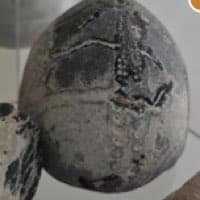
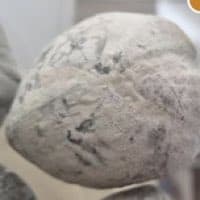
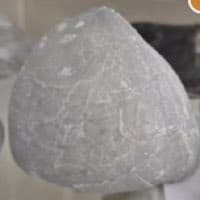
 Drop photos here
Your data
Collect first, decide later
The app creates an anonymous collection the first time it starts. Whether you ever add an email address is up to you afterwards.
No account needed
No name, no password, no sign-up. You only need an email address when you want the collection on a second device, or back after losing a phone.
Servers in Germany
Your collection sits on a server in Germany. The image search runs there too — your photos never reach an outside AI service and are not analysed for anything else.
Location data stripped on arrival
EXIF, XMP and IPTC data are removed from the photo on upload — coordinates, camera serial numbers, all of it. The find site exists only where you wrote it down.
Deleting means deleting
You delete your collection yourself, from inside the app — with the photos and everything attached to them. No support ticket, no waiting period.
Pricing
What it costs
The limit is on photos, not on features. Each collection has an upload quota — shared by the whole team.
First try
20photos
To try it out, with no email address at all. Everything works — but the collection is tied to this one device.
- Test phase
Registered user
200photos
Free as soon as you add an email address. Restorable collection, several devices, team invites, guest code. Need more? Say so and we will raise it.
Later · Membership
Unlimited
For large collections, clubs and exhibitions, to cover the server costs. What is free today stays free — we do not take features away from anyone.
The drawer is not getting any emptier.
First fossil photographed, first record made — it takes under a minute and costs nothing.
Get it on Google PlayAndroid · iOS to follow